
For patients
Living with diabetes means taking extra care of your health — including safeguarding your feet. The right footwear is one of the most crucial steps in preventing complications, and we're here to guide you on the journey to improved foot health.
Diabetic shoes aren't ordinary shoes
They're specially crafted medical devices designed to prevent the foot complications that diabetes makes dangerous.
Protection from complications
Seamless interiors, protective toe boxes, and cushioned soles guard against the blisters, sores, and ulcers that reduced sensation can hide.
Superior cushioning & support
Extra depth and custom-molded inserts distribute your weight evenly, easing pressure points and keeping you comfortable on your feet all day.
A fit that's actually right
Available in a wide range of sizes and widths — and fitted by a professional, so swelling, bunions, and hammertoes are accounted for.
Breathable materials
Many styles allow air to circulate, supporting a healthier foot environment and reducing moisture-related complications.
What to expect at your professional fitting
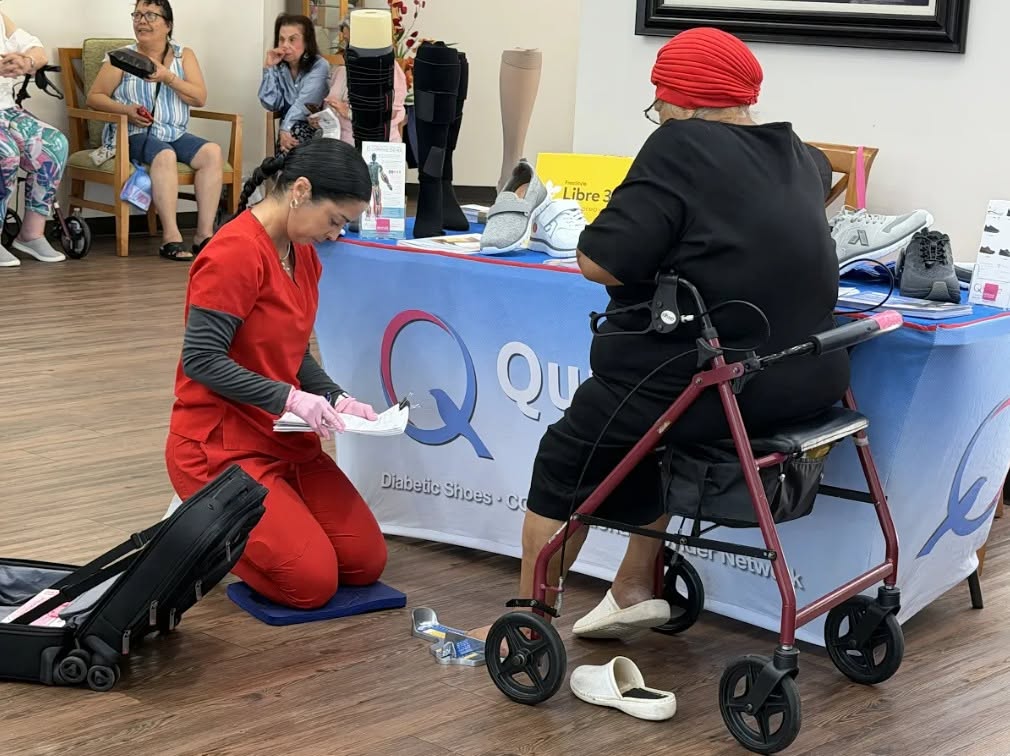
Medicare requires that diabetic shoes be fitted by a trained podiatrist, certified pedorthist, or licensed shoe fitter — and it's also how you get shoes that truly fit. Best of all, in-home fittings are available: our fitters come to you.
- ✓Both feet measured for length, width, and depth — feet change over time, especially with diabetes.
- ✓Style selection from athletic, casual, and dress options that match how you actually live.
- ✓Custom inserts molded to the exact shape of your feet.
- ✓Fit check and follow-up to make sure everything feels right before you're done.
Five habits that protect your feet
Good shoes are half the battle. These simple daily habits do the rest.
1. Inspect daily
Check your feet every day for cuts, blisters, redness, or swelling — use a mirror for the soles, or ask a family member to help.
2. Wash & dry gently
Use lukewarm water and mild soap, and dry carefully between the toes where moisture invites infection.
3. Moisturize (not between toes)
Keep skin from cracking with daily lotion on tops and soles — but skip between the toes.
4. Never go barefoot
Even indoors. Reduced sensation means a small object can cause an injury you won't feel.
5. See your doctor promptly
Any sore that doesn't heal within a few days deserves a call to your physician or podiatrist — early treatment prevents serious complications.
And wear your prescribed shoes
Therapeutic shoes only work when they're on your feet. Wear them as your everyday shoes — that's what they're designed for.
Therapeutic Doesn’t Mean Clinical
Modern colors and silhouettes you’ll actually want to wear — every pair is Medicare-approved therapeutic footwear.
 Dr Comfort - 51925 - Don - Green
 Anodyne - W011 - Purple/Pink
 Anodyne - MHA046 - Blue/Green
 Anodyne - W023 - Teal/Lime
Browse all 177 styles: men’s shoes · women’s shoes
Find out if you qualify in minutes
No cost. No obligation. We'll check your benefits and handle everything with your doctor and insurance.